
Trusted. Nonprofit. Since 1978.
Trusted. Nonprofit. Since 1978.
Trusted. Nonprofit. Since 1978.

Forget what you knew about when mammals developed modern hearing. New research pushes that milestone back 50 million years, to a creature that lived 250 million years ago, just as the age of dinosaurs began.
Why ...

Researchers identified 211 distinct genetic mutations linked to childhood deafness in Algeria, Morocco, Mauritania, and Jordan, with over a third being new. The breakthrough ends decades of diagnostic uncertainty for families wondering if their deaf ...
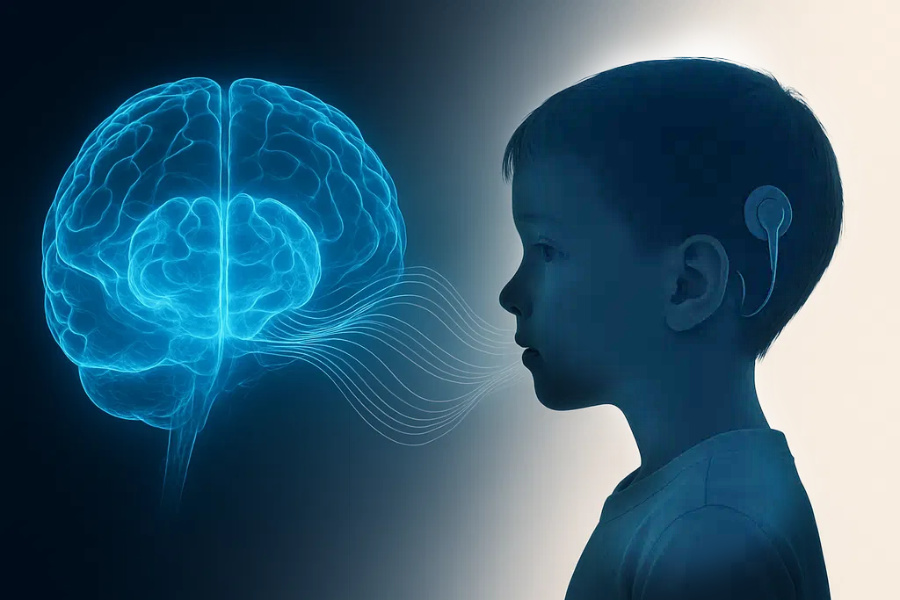
Researchers at Chicago's Lurie Children's Hospital created a new AI tool that predicts with 92% accuracy which deaf children will struggle with speech after cochlear implants before surgery. It reads pre-surgery brain scans using AI. The research, ...

Ever wonder how owls glide through the night without making a sound? Their feathers and skin work together for perfect noise-canceling flights. Now, researchers have figured out how to mimic this natural superpower with a material that may solve many ...

Forest bathing, a Japanese practice of immersing in nature (Shinrin Yoku), lowers stress and blood pressure. How about virtual reality (VR) forest bathing? Could it produce similar results? Scientists in Germany are convinced it could.
Researchers ...

New research reveals a counterintuitive twist in how children with hearing loss develop speech. While cochlear implants provide critical sound, turning them off might improve speech motor control for some users.
Why it matters
This ...

Primary progressive aphasia (PPA) gradually robs people of their ability to speak and understand language, leaving them increasingly isolated. Currently, there's no cure. But researchers at the University of Arizona have developed a promising new approach: ...

Barbara Schmidt, 83, shattered her hip on a driveway. Fell down an escalator in Germany. Knocked herself unconscious decorating for Christmas, bruising her face. Her family feared an illness. The real culprit—and one facing millions of American seniors? ...

Parkinson's Disease (PD) is a relentless neurodegenerative disorder. While the tremors and rigidity are visible, the cognitive decline is often the most debilitating non-motor symptom. It attacks memory and executive function. New research confirms ...

Sertoma Speech & Hearing Centers
is a 501(c)(3). EIN: 36-2882864.
© 2024, Sertoma Speech & Hearing Centers

Professional Services
Contact Us
Crest Hill
P 630-633-5060
F 630-633-5064
Palos Hills
P 708-599-9500
F 708-599-2791