Parkinson's Disease (PD) is a relentless neurodegenerative disorder. While the tremors and rigidity are visible, the cognitive decline is often the most debilitating non-motor symptom. It attacks memory and executive function. New research confirms that a simple, available tool can slow this decline. It is not a new drug. It's movement.
Why it matters
Physical activity is a neuroprotective intervention. It structurally slows cognitive decline in the disease’s early stages. This moves activity from "nice-to-have" to "structural medicine." Clinicians should use physical activity as a primary defense against the temporoparietal thinning that characterizes PD cognitive decline.
By the numbers
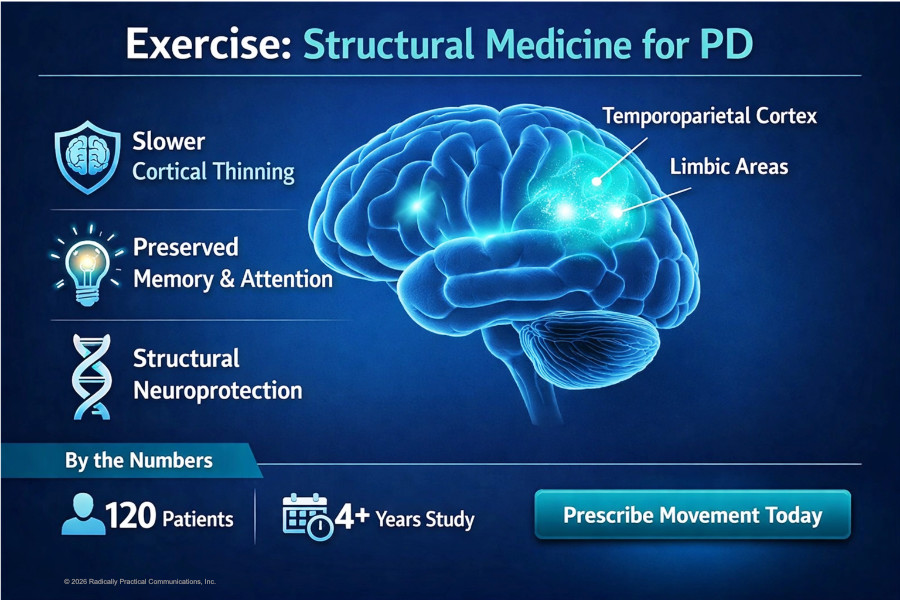
- 120 patients with early PD were tracked.
- Over 4 years of serial MRI scans and activity assessments.
- 33% of participants were women.
1 big idea
Exercise is medicine for the PD brain. The benefit is structural.
- Regular movement shields the brain’s gray matter from neurodegeneration.
- This mechanism contributes directly to preserved cognitive function.
- Physical activity is a key intervention to delay disease progression.
The Anatomy of Protection
Researchers used the Parkinson's Progression Markers Initiative (PPMI) to quantify how movement shields the brain.
- Slower cortical thinning occurred in the lateral temporal cortex, fusiform gyrus, and inferior parietal cortex.
- Slower volume loss was measured in the hippocampus and the amygdala.
- These structural changes mediate the association with a slower decline in memory and attention. The physical change drives the cognitive benefit.
Reality check
Context is critical for clinical application:
- The study was observational. It shows association, not direct cause-and-effect.
- Activity levels relied on the Physical Activity Scale for the Elderly (PASE) self-reports.
- Clinical application is currently validated only for early-stage PD patients.
The bottom line
Stop viewing exercise as optional. It is a non-pharmacological tool that directly impacts the biological progression of cognitive decline. Prescribe movement today.