Ever felt embarrassed about your high-pitched "goo-goo ga-ga" voice around babies? Well, you can stop. New research shows baby talk isn't just adorable nonsense—it's legit communication that happens everywhere.
Why it matters
Adults stretch out vowel sounds when chatting with babies across at least 10 different languages. You're not being silly. You're following a universal human instinct that might help babies learn to talk.
Here's the thing—scientists have been arguing about this for years. Some thought that exaggerated vowels helped babies process sounds more effectively. Others figured it was just what happens when you smile at something cute.
The big picture
Researchers dug into 35 studies worldwide to finally settle this debate. They compared how we talk to babies versus how we speak to everyone else.
For example, mothers stretch out vowels like "a," "i," and "u" when talking to babies. This makes these sounds more distinct and easier for tiny developing brains to catch.
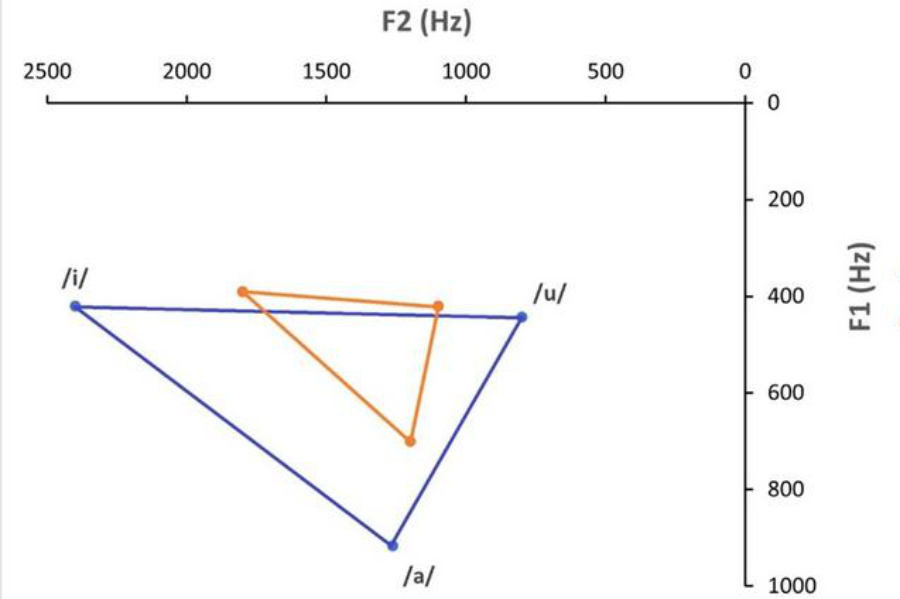 The larger blue triangle shows the exaggerated vowel sounds produced during infant-directed speech (baby talk). The smaller yellow triangle indicates the vowel sounds made during adult-directed speech.
By the numbers
They looked at 20 studies with similar methods, plus 35 total. The problem is, most studies were pretty small. Not enough data to make rock-solid conclusions. Researchers say future studies need way more participants.
The challenge
Different languages complicate things. What works for English babies might not work for babies learning Japanese or Arabic. Plus, how you measure sound frequencies matters—different scales give different results.
Irena Lovčević from the University of Tokyo led this research. She says they're just getting started. Next up? Figuring out other things that help babies pick up language, like how much talking they hear daily and whether back-and-forth conversations matter.
The takeaway
Baby talk is a valid form of communication, not just a form of goofiness. When you naturally switch to that sing-song voice, you're tapping into something humans have done forever.
The study allows parents to embrace their inner baby voice with scientific backing. You're assisting your child in developing language skills—even if others find your speech odd.
Scientists are still figuring out exactly how baby talk works across different languages. While the basic approach seems helpful everywhere, each language has its own unique patterns. We know baby talk supports language learning, but researchers need more studies to understand all the details of how babies learn to speak.