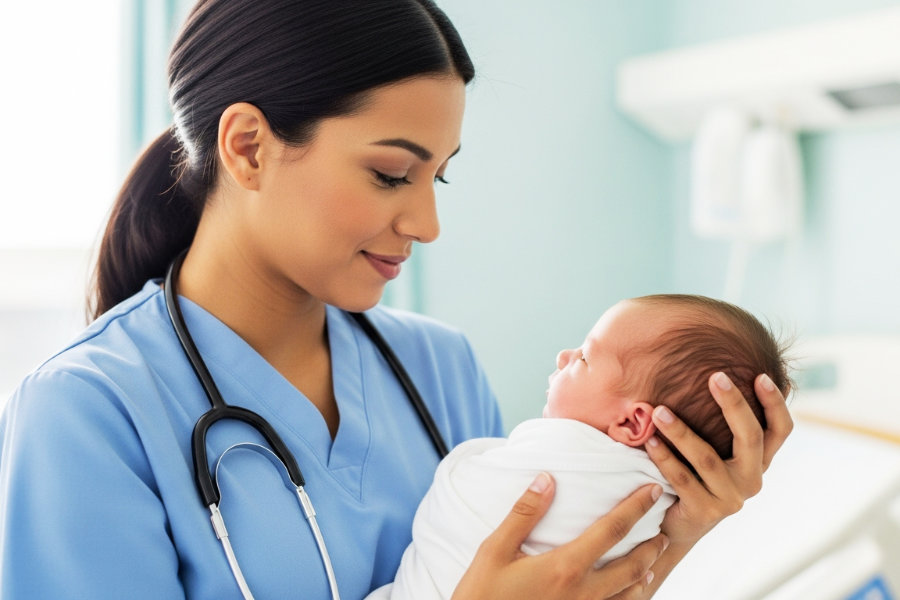
In a groundbreaking eight-year study, researchers uncovered a critical way to protect babies from a hidden threat: a common virus that can silently steal children's hearing. This study points to a simple newborn test that could safeguard the futures of thousands of kids, sparking a nationwide movement to catch the problem early.
Why it matters
One-third of hearing loss linked to congenital cytomegalovirus (cCMV) develops after a baby leaves the hospital. These children are often asymptomatic at birth and pass their initial hearing screening, only to develop permanent hearing loss months later. The only way to find them early is universal cCMV screening.
By the numbers
The Memphis study screened newborns for eight years. The data is clear:
-
1 in 200 babies is born with cCMV.
-
1 in 5 infected will develop long-term health issues.
-
10% of cCMV-positive infants developed sensorineural hearing loss.
-
5 of 8 late-onset cases had no symptoms at birth.
These numbers reveal a growing threat.
A difficult truth
cCMV is the leading infectious cause of birth defects and the most common non-genetic cause of infant hearing loss. A baby who passes their initial hearing test can still lose their hearing. The damage isn't always immediate; hearing can worsen over time, making early identification critical.
The challenge
The study revealed a major hurdle: follow-up. Over half (55%) of the families were lost to follow-up between one and three months, with the highest dropout rates among those facing socioeconomic barriers. A screening test is only the first step; support systems are essential for care.
Zoom in
This research is driving a legislative push by the American Academy of Otolaryngology–Head and Neck Surgery.
-
Federally: The Stop CMV Act is advancing in Congress to fund screening programs.
-
In the states: Oregon passed a law, and New York and Massachusetts are considering bills for universal cCMV screening.
The bottom line
Catching CMV early—ideally within the first three weeks of a baby's life—can be a game-changer. Doctors can start treatments like antiviral medications and closely monitor hearing, which can help kids develop normally and stop hearing loss before it becomes a serious problem. The simple solution? Universal screening that catches this virus early.
Healthy children's hearing starts here
Learn about the health of your child's hearing with a free 15-minute hearing screening by an audiologist.
★ Call 708-599-9500 to schedule.
★ For facts about hearing loss and hearing aid options, grab your copy of The Hearing Loss Guide.
★ Sign up for our newsletter for the latest on Hearing aids, dementia triggered by hearing loss, pediatric speech and hearing, speech-language therapies, Parkinson's Voice therapies, and occupational-hearing conservation. We publish our newsletter eight times a year.
Don't let untreated hearing loss spoil your enjoyment of life.
Crest Hill, IL - 630-633-5060 | Palos Hills, IL - 708-599-9500