Scientists mapped how Kemp's ridley sea turtles hear underwater. The turtles cannot vocalize pain from the engine noise of ships. Now we know why they might want to.
Why it matters
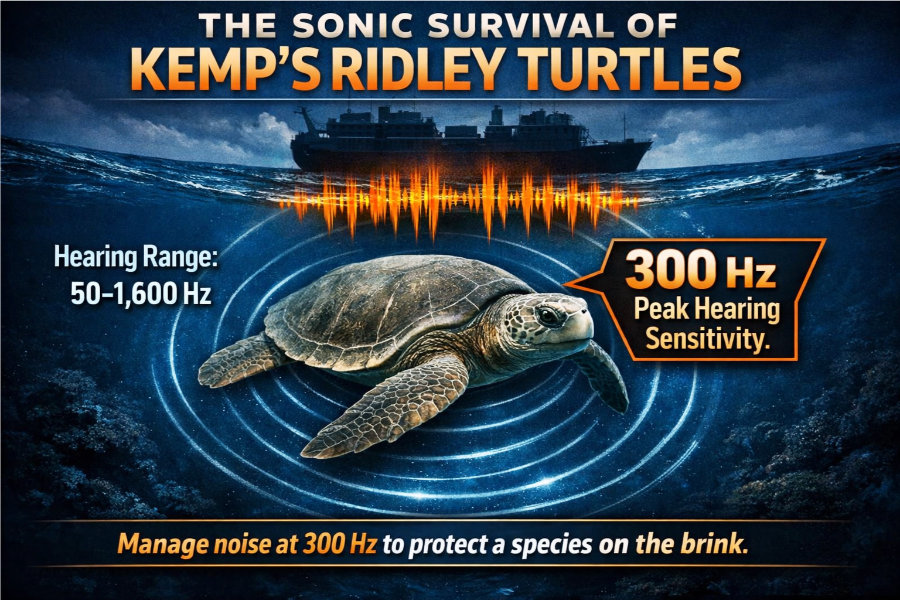
Kemp's ridley sea turtles hear best at 300 Hz. That is not a coincidence. It is a collision course between survival and commerce.
How it works
Researchers attached suction-cup electrodes to turtle heads. They played tones from 50 Hz to 1,600 Hz and tracked the auditory nerve signals in real time.
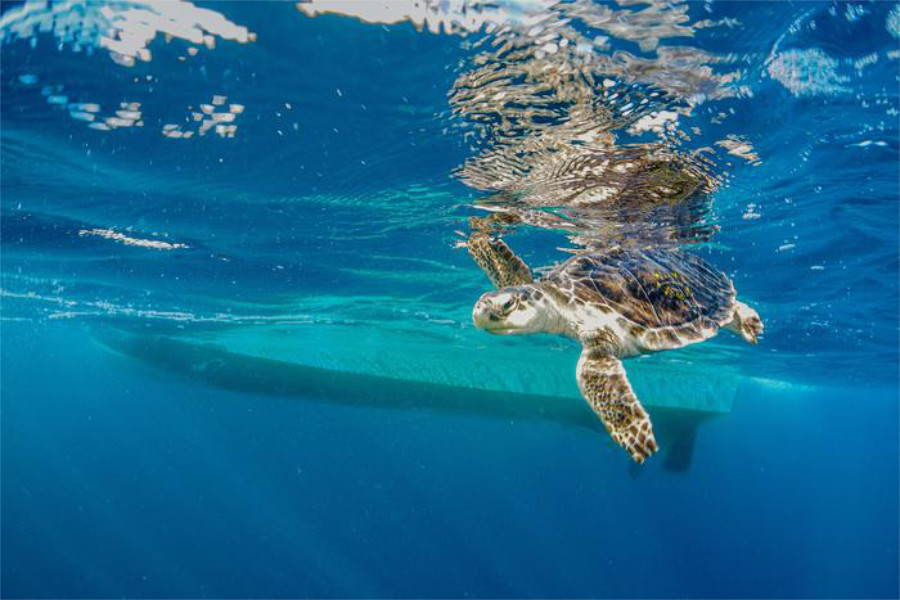 Kemp’s ridley sea turtles are among the most endangered sea turtles on the planet, residing in the highly trafficked eastern and Gulf coasts of North America. Knowing how the noise from human activities affects them can help conservation efforts. Photo credit: Instigator/Shanna Stawicki Photography
By the numbers:
-
300 Hz: Peak sensitivity
-
50–1,600 Hz: Full detectable range
-
Declining sensitivity: Kicks in above 300 Hz
Reality check
Frequency overlap flags where to look, not proof of harm. Lead author Charles Muirhead says: "This does not automatically mean that harmful effects are occurring."
What's next
Researchers will track behavioral responses in real environmental conditions. They want to connect measured sound signals to physical noise effects.
The bottom line
-
Manage noise at 300 Hz to protect Kemp's ridley hearing.
-
Ignore it and gamble with a species on the brink.
What to watch
NOAA's next steps on vessel speed limits and routing changes in the Gulf and Atlantic habitats.