Chances are, you know about vitamins and minerals, but choline? It's probably not on your radar. This essential nutrient is critical in brain health, memory function, and early childhood development. The surprising truth is that most people aren't consuming enough of it.
Why it matters
Choline is essential for building healthy brains, as it helps produce acetylcholine, a brain chemical crucial for memory and learning. During pregnancy, choline plays a vital role in shaping fetal brain development; low intake is linked to higher risks of ADHD and dyslexia. However, 89% of U.S. adults do not meet the recommended intake of choline.
By the numbers
- Daily needs: Men need 550mg; women 425mg. Pregnant? Aim for 450mg.
- Eggs pack a punch: One egg has ~150mg. Six eggs = ~930mg (the dose used in studies).
- Reality check: Only 11% of Americans hit their daily target.
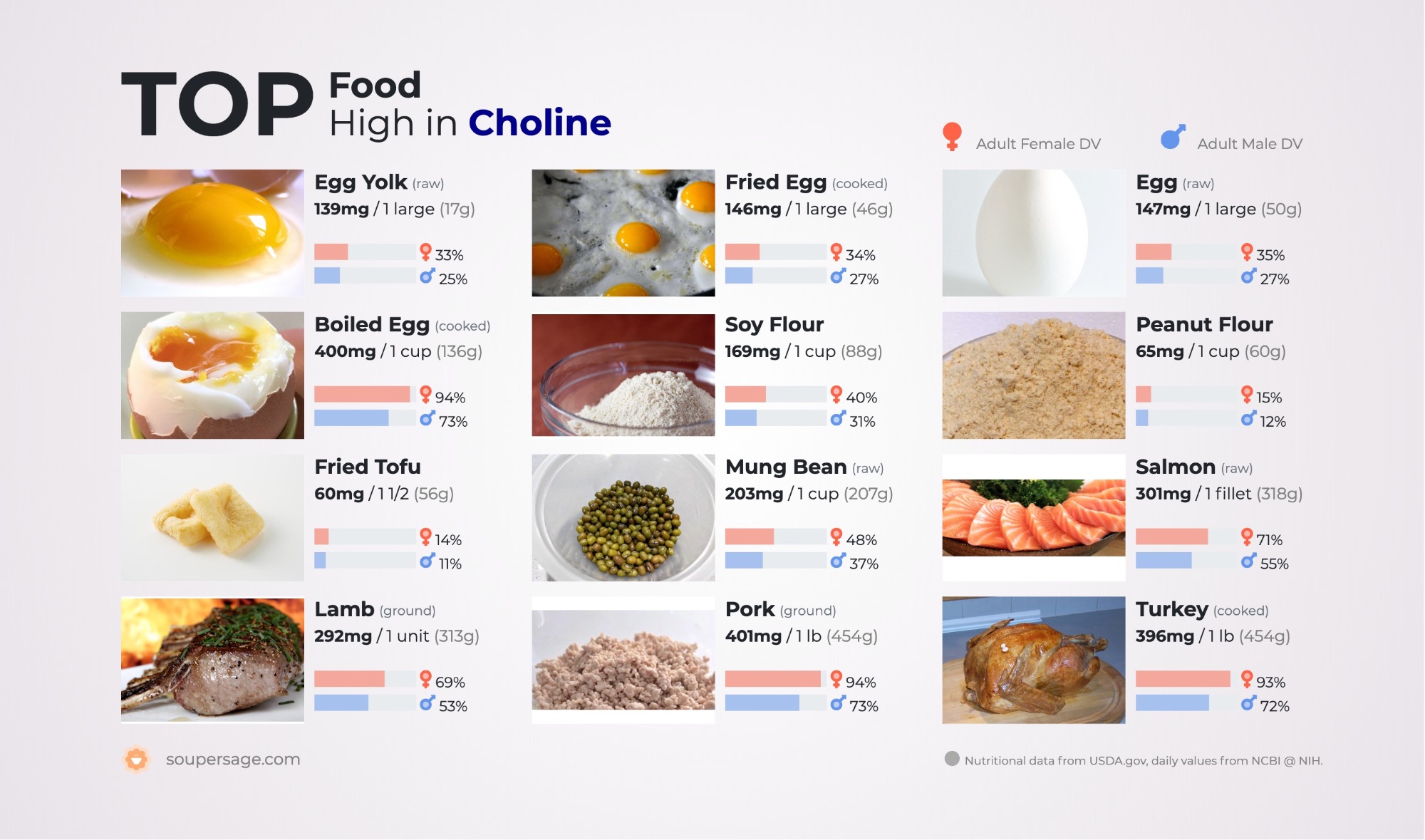
Best dietary sources
The best dietary sources of choline include both animal-based and plant-based foods. Here are the top options:
Animal-based sources
- Egg yolks: One large egg contains approximately 147 mg of choline, concentrated in the yolk.
- Fish: Salmon is high in choline, with 187 mg per 3 ounces, followed by cod and tuna.
- Beef: A 3-ounce serving of lean beef provides about 117 mg of choline.
- Poultry: Chicken breast offers around 72 mg per 3 ounces, while turkey provides up to 94 mg per cup of diced meat.
Plant-based sources
- Soybeans: Roasted soybeans deliver approximately 107 mg per half cup, making them the best plant-based source.
- Cruciferous vegetables: Cauliflower, broccoli, and Brussels sprouts contain moderate amounts of choline (about 30–47 mg per cup).
- Shiitake mushrooms: One cup of cooked shiitake mushrooms provides a good amount of choline.
- Legumes: Kidney beans and lima beans are rich sources, with up to 129 mg per cup for black beans[4][5].
- Whole grains: Wheat germ and quinoa provide smaller amounts of choline but are still beneficial additions to a diet[1][5].
These foods can help meet daily choline needs, essential for brain health, liver function, and overall cellular activity. Combining animal and plant-based sources can ensure adequate intake while accommodating dietary preferences.
The takeaway
- Prioritize eggs: They’re one of the easiest ways to boost intake.
- Pregnancy is key: Higher choline during the second trimester correlates with better childhood memory.
- Consider supplements: Especially if you avoid animal products.
- Advocate for awareness: Clinicians are starting to pay attention, but public health guidelines lag.
Choline isn’t a magic pill, but it’s a missing piece for brain health. Start with your plate.
Go deeper: The BBC on Choline: The underappreciated nutrient that's vital for our brains →