Bats and moths have been locked in an arms race for 60 million years. Now, scientists have discovered how moths survive these high-stakes aerial battles. Moth's remarkable survival strategy hinges on interpreting the signals bats use when hunting.
Why it matters
More than natural history, this research offers a new, environmentally-friendly strategy for pest control.
For example, replicating bats' attack sounds would reduce moth egg-laying on vegetables, reduce destructive nighttime moth activity, and cut down pesticide use
How it works
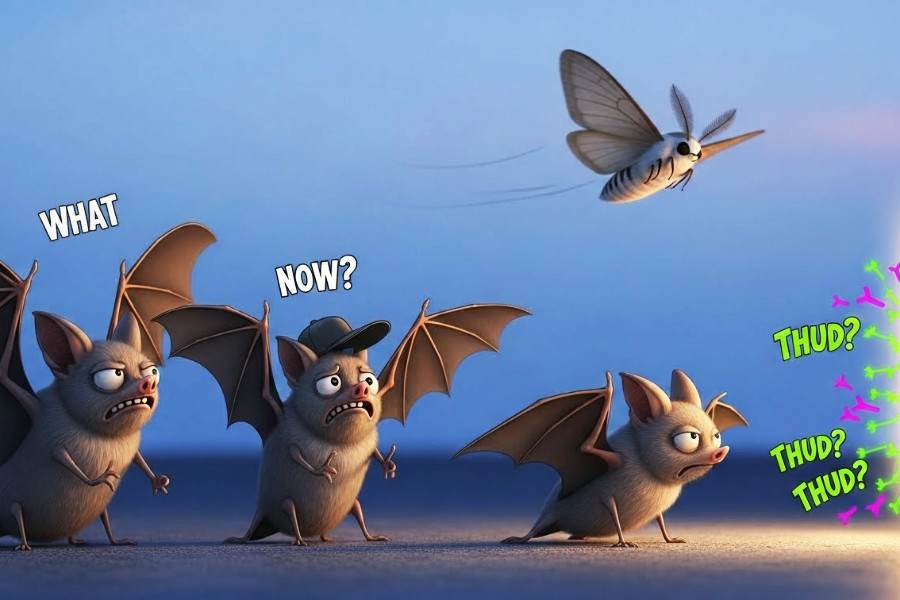
The pulse repetition rate (PRR) of a bat’s calls indicates different hunt stages.
-
Low PRRs (1 to 10 Hz) mean the bat searches for prey. Moths react with simple avoidance turns.
-
High PRRs (80 to 160 Hz) mean the bat closes in. This ends in a rapid burst known as the "terminal buzz," just before capture.
-
When faced with these high-rate pulses, moths either fly erratically or cease flight altogether.
A closer look
The study focused on Autographa nigrisigna, a noctuid moth pest found across East and South Asia.
- Researchers played simulated calls in the lab to 100 moths.
- Egg-bearing females showed a strong response. They were more likely to cease flight when exposed to high PRRs.
- They avoid high-risk areas to balance survival and reproductive investment.
The bottom line
Nature's defense mechanisms are now inspiring new technology.
- If ultrasonic emitters work in the field, it could lead to reduced moth egg-laying on vegetables and less crop damage.
- Next up: Field testing the ultrasonic emitters to determine if the method works for other major moth pests.