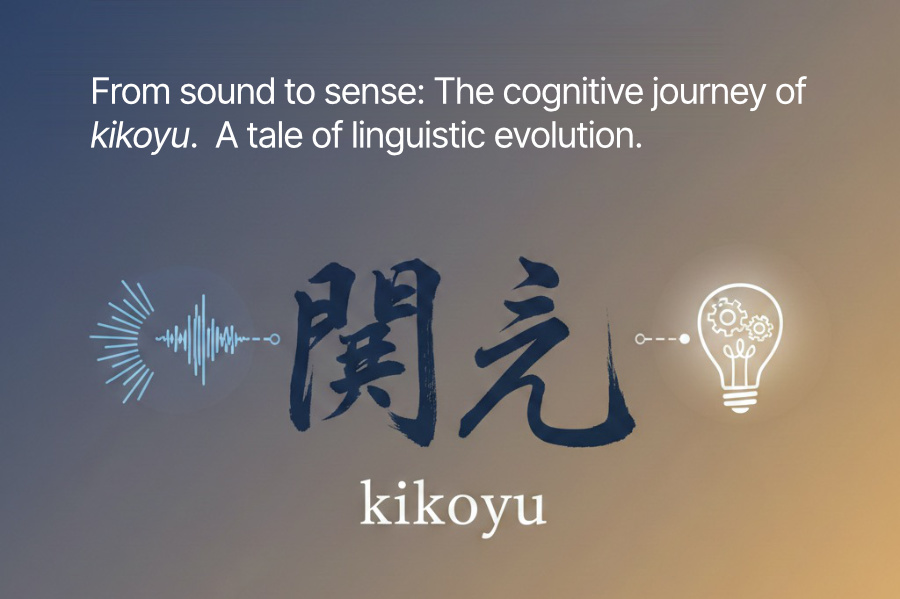
How can a single word reveal centuries of cognitive transformation? Consider the Japanese verb "kikoyu," which originally meant "to hear" and has evolved to mean "to understand" or even to possess a strong conviction.
Why it matters
The evolution of "kikoyu" shows how sensory perception can shape abstract concepts. This isn’t just about linguistics—it’s about how our brains transform sensory experiences into complex ideas. For example, consider how the word "grasp" can mean both a physical action and understanding a concept.
The big picture
-
"Kikoyu" initially meant unintentional hearing.
-
Over time, it came to mean approximate understanding, then general understanding, and finally, conviction.
-
Imagine hearing a sound and gradually understanding its source, context, and meaning. This is similar to how "kikoyu" evolved from hearing to understanding.
How it works
-
The evolution follows a process called synecdoche, which involves simulation, generalization, and concretization.
-
Think of it like solving a puzzle. You start with a piece (hearing), then see the bigger picture (understanding), and finally feel convinced by the solution (conviction).
-
When we hear something, our brains deduce context. This process is called cognitive simulation.
A closer look
-
Researchers analyzed the Corpus of Historical Japanese to trace this evolution from the 8th to the 20th century.
-
The shift from hearing to understanding occurs in other languages as well. In English, we say "I see" to mean "I understand." The Japanese use hearing instead of sight.
The bottom line
The study of "kikoyu" shows that language evolution reflects deeper cognitive processes. This evolution reminds us how our brains turn sensory experiences into complex ideas.
Next time you hear something, consider how your brain processes sound into understanding. What other words in your language reflect this journey?
-
Maybe "grasp" in English, which shifts from a physical grip to an intellectual comprehension?
-
Or "digest" when we talk about processing information?